Fluffy Japanese Cotton Cheesecake Cupcakes
Forget those dense, heavy cheesecakes that feel like a brick after dinner. We are aiming for pure, cloud-like joy that melts instantly, offering a light, ethereal experience.
Get ready to master the delicate art of makingFluffy Japanese Cotton Cheesecake Cupcakes—they are so airy, you will wonder if these tiny beauties actually defy gravity.
- This scaled-down recipe converts the challenging soufflé technique into simple, individual servings perfect for any novice baker to master easily.
- Experience an exquisite balance of tangy cream cheese and light vanilla sweetness, resulting in a flavor profile that is delicate yet incredibly memorable.
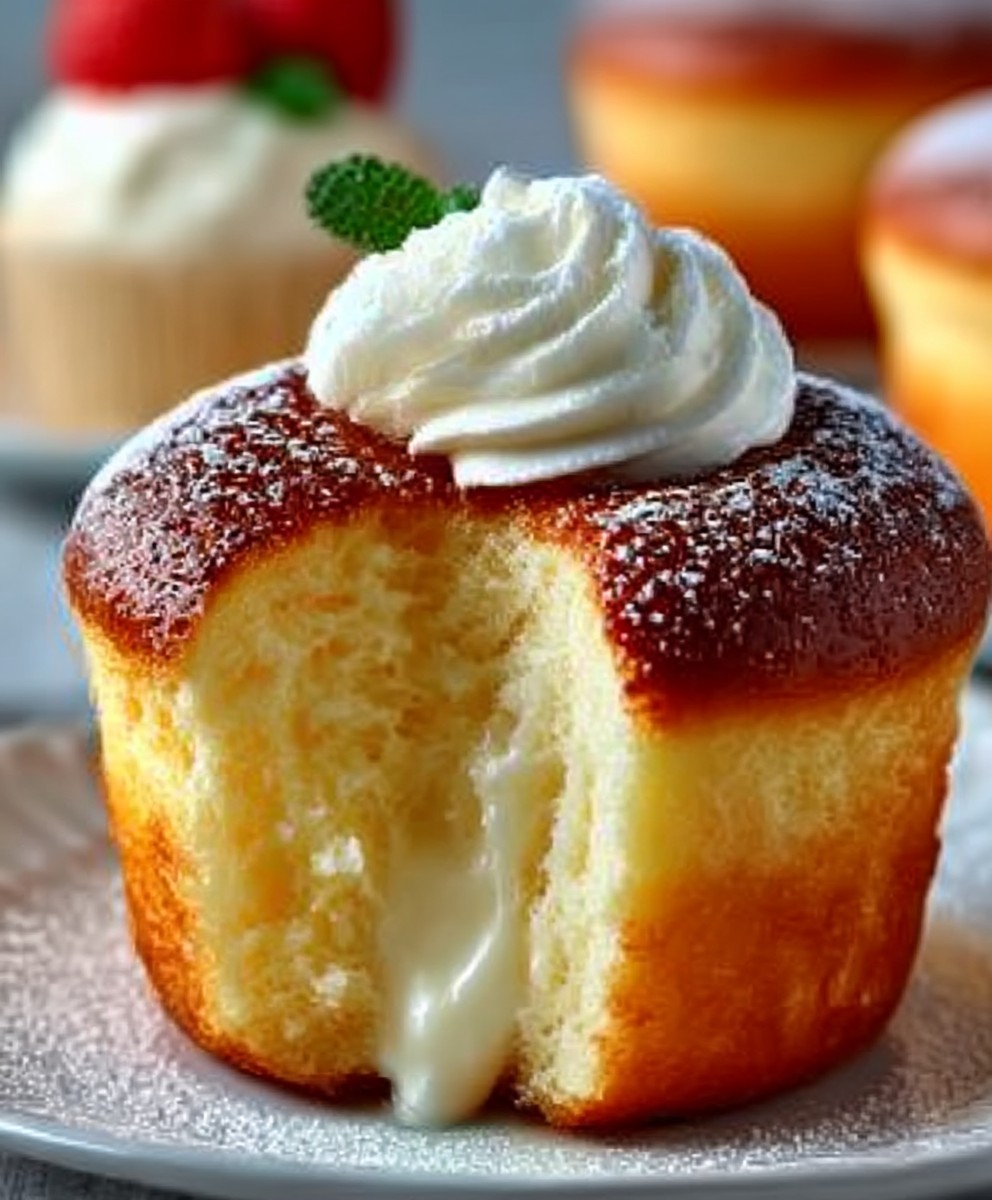
- The visual appeal is undeniable; these little beauties possess a perfectly domed top and that signature, mesmerizing, and desirable jiggly texture.
- Cupcakes offer superior portion control, making them ideal for elegant parties, afternoon tea, or simply satisfying a small, luxurious craving anytime.
The Secret Science Behind the “Jiggle”
The term “cotton” isn’t just marketing hype; it perfectly describes the texture of this dessert. Unlike its dense New York cousin, the Japanese version minimizes flour and relies heavily on whipped egg whites to achieve its structure. Think of it as a hybrid—part cheesecake, part soufflé, and entirely magical. The key to that famous wobble is gentle handling and a strict water bath, known professionally as a Bain-Marie.
The Bain-Marie is non-negotiable when makingFluffy Japanese Cotton Cheesecake Cupcakes. Baking the batter while the cupcake tin sits in a pool of hot water ensures the oven’s heat is distributed gently and evenly. This environment prevents the outer edges from setting too quickly, which is the number one cause of cracking and sinking in soufflé-style cakes. If you skip the water bath, you essentially bake a solid, firm cake, defeating the entire purpose of the “cotton” texture we are chasing.
Additionally, the fat content must be heated before mixing. This step, often referred to as a roux or heated emulsion, helps the dairy mixture absorb more air when the meringue is folded in. Heating the cream cheese and milk slightly causes the starch (flour) to gelatinize faster, which stabilizes the structure, allowing the final product to puff up beautifully without becoming rubbery. If your mixture feels too cold when incorporating the meringue, the fat will seize, resulting in a dense, rather sad cupcake.
Essential Techniques for Fluffy Success
Two fundamental techniques separate baking mediocrity from achieving true cotton cheesecake mastery: the emulsion and the meringue. First, when melting the cream cheese, butter, and milk together, heat them gently until just melted and smooth. Overheating will cook the eggs later, giving you a scrambled mess, not a velvety smooth batter. The mixture should be warm to the touch, similar to a cozy bath, but not piping hot.
Second, perfecting the meringue is absolutely crucial. You must whip the egg whites until they reach soft peaks—not stiff peaks. Stiff peaks are ideal for structural desserts like macarons, but for a soufflé cheesecake, they are too rigid. Rigid meringue struggles to expand in the oven and ultimately causes the cake to collapse dramatically upon cooling. Soft peaks, which droop slightly when the whisk is lifted, provide the perfect balance of structure and elasticity necessary for that dreamy, jiggly finish.
Finally, always fold the meringue into the cheese mixture in three separate additions. The first addition lightens the heavy cheese base, making the subsequent folds easier and preventing deflating the delicate air bubbles you worked so hard to create. Use a rubber spatula and cut right through the middle, scooping up from the bottom and gently folding the batter over. Never stir aggressively; think of yourself as petting a very fragile kitten.
Ingredients for Fluffy Japanese Cotton Cheesecake Cupcakes
Here’s what you’ll need to make this delicious dish:
- Cream CheeseUse full-fat, block-style cream cheese at room temperature for the best melting consistency and richness.
- Unsalted ButterProvides the necessary richness and helps create the smooth emulsion base when gently heated with the cheese.
- MilkWhole milk is recommended for optimal moisture and flavor, helping to keep the cupcakes soft and tender.
- Cake FlourLow-protein cake flour is essential; it minimizes gluten development, which is critical for that signature light, fluffy structure.
- Egg YolksUsed in the base mixture, they add flavor, richness, and help emulsify the fats, giving the batter a beautiful color.
- Egg WhitesThe backbone of the dessert; they must be cold and separated perfectly, ensuring they whip into a voluminous meringue.
- Granulated SugarNeeded primarily for stabilizing the meringue, where it helps the egg whites hold their structure without collapsing during baking.
- Vanilla Bean PasteUse a high-quality vanilla bean paste to enhance the delicate flavor profile without overpowering the cheese.
- Lemon Juice or Apple Cider VinegarA tiny splash added to the egg whites helps stabilize the meringue, allowing it to reach soft peaks quickly.
The full ingredients list, including measurements, is provided in the recipe card directly below.
How to Make Fluffy Japanese Cotton Cheesecake Cupcakes
Follow these simple steps to prepare this delicious dish:
Step 1: Prepare the Equipment and Emulsion Base
Preheat your oven to 325°F (160°C). Place 12 cupcake liners into a muffin tin. You will also need a larger, shallow pan (like a roasting tray) to act as the water bath. In a double boiler or a heatproof bowl set over simmering water, gently combine the cream cheese, butter, and milk until completely smooth and melted, then remove from heat and whisk in the cake flour until incorporated. Whisk in the egg yolks and vanilla until the mixture is uniform and velvety.
Step 2: Create the Perfect Meringue
In a separate, extremely clean bowl (any trace of grease will ruin the meringue), whip the cold egg whites using an electric mixer until frothy. Add the lemon juice or vinegar. Gradually add the granulated sugar, beating until the meringue forms glossy soft peaks that curl slightly at the tip when you lift the whisk. Do not overbeat, or your cupcakes will crack.
Step 3: Folding the Cotton Batter
Gently fold one-third of the meringue into the cream cheese batter using a rubber spatula to lighten the mixture. Once mostly combined, gently fold in the remaining meringue in two additions, taking care not to deflate the air. Stop folding as soon as no streaks of egg white remain; overmixing is the ultimate destroyer of fluffiness.
Step 4: Bake in the Water Bath
Carefully pour the batter evenly into the prepared cupcake liners, filling them about three-quarters full. Place the muffin tin into the larger shallow pan. Pour boiling water into the shallow pan, ensuring the water level comes about halfway up the sides of the muffin tin, creating the crucial water bath. Immediately transfer the setup to the preheated oven.
Step 5: The Two-Stage Baking Process
Bake the cupcakes for 20 minutes at 325°F (160°C). After 20 minutes, reduce the oven temperature to 285°F (140°C) without opening the door and bake for an additional 25 to 30 minutes. Turn off the oven, prop the door open slightly with a wooden spoon, and let the cupcakes cool slowly inside the oven for 30 minutes. This slow cooling prevents sudden temperature changes that cause cracking and shrinking.
Transfer to plates and dust lightly with powdered sugar, serving them slightly warm or chilled for the perfect finishing touch.
Troubleshooting: Why Didn’t My Cotton Cheesecake Jiggle?
Ah, the legendary jiggle! It is the mark of success, but achieving it often requires patience and strict adherence to temperature control. If yourFluffy Japanese Cotton Cheesecake Cupcakescame out looking more like small, dense hockey pucks than light clouds, the culprit is likely overbaking or insufficient moisture. Remember, this is a delicate balance of structure and moisture; you want them fully cooked but still slightly moist inside.
A cracked top usually indicates that your oven temperature was too high, causing the top to set and dry out before the center expanded fully. To fix this, always trust your oven thermometer over the dial setting, and ensure you use the lower, two-stage baking temperature. If the cupcakes sank dramatically, you probably overmixed the meringue in Step 3, destroying the air bubbles that were supposed to hold the structure. Gentle folding is key.
Another common mistake is removing them from the oven too quickly. The 30-minute cooling period inside the switched-off oven is essential. This gradual temperature reduction stabilizes the egg protein structure, preventing the sudden, devastating shrinkage that occurs when moving the hot, tender cupcakes directly into a cool room environment. Patience during this cooling phase will reward you with the perfect, gravity-defying bounce.
Serving and Storage Suggestions
These light cheesecake cupcakes are at their best when served slightly chilled. They truly shine when dusted with a delicate veil of powdered sugar or paired with fresh berries, like raspberries or blueberries, which cut through the creaminess beautifully. If you want to elevate them further, a dollop of very lightly sweetened, freshly whipped cream is the ideal accompaniment.
Store leftover cupcakes in an airtight container in the refrigerator. They maintain their perfect texture for up to three days, though honestly, they rarely last past the first evening. Because they are so incredibly light, they also freeze surprisingly well. To freeze, place the cooled cupcakes on a baking sheet until solid, then transfer them to a freezer bag or container. Thaw overnight in the refrigerator before serving for a nearly perfect texture.
Frequently Asked Questions About Japanese Cheesecake Cupcakes
Can I make the batter ahead of time?
It is strongly recommended that you do not make the batter ahead of time. The air incorporated into the egg whites (the meringue) is essential for the lift, and this air will deflate if the batter sits even for a short period, leading to flat and dense results.
What if I don’t have cake flour?
While cake flour provides the ideal soft texture, you can substitute it with a mix of all-purpose flour and cornstarch. For every cup of all-purpose flour, remove two tablespoons and replace them with two tablespoons of cornstarch to mimic the lower protein content.
Why must the eggs be separated while cold?
Cold egg whites separate much cleaner than room-temperature whites because the yolk is firmer. However, always allow the separated egg whites to come to room temperature before whipping them into meringue, as they achieve better volume when warmer.
Is the water bath really necessary for these fluffy Japanese cotton cheesecake cupcakes?
Yes, the water bath is absolutely necessary for this specific style of cheesecake. It regulates the temperature, provides humidity, and ensures the cupcakes bake gently and evenly, preventing the edges from setting too fast and leading to the signature jiggly texture.
The Quest for Cloud-Like Desserts: My Cotton Cheesecake Obsession
You know that moment when you bite into a dessert and it feels like a soft, edible cloud materialized just for you? That’s exactly how I felt the first time I encountered the legendary Japanese cheesecake. It’s worlds away from its dense New York cousin. Instead of a brick of sweetness, you get an ethereal puff that practically dissolves on your tongue.
But let’s be real, baking a giant, perfect Japanese cheesecake can be intimidating. The water bath, the cooling, the inevitable crack—it’s high drama in the kitchen. That is why I miniaturized the experience. We are diving into the world of individual portions, creating the ultimate, crack-free, incredibly delightfulFluffy Japanese Cotton Cheesecake Cupcakes. These treats deliver all the jiggly, light texture you crave, but in a convenient, portable form factor. No more wrestling with spring forms or worrying about structural integrity. Just perfect, tiny masterpieces ready for immediate consumption (after cooling, of course. Patience is a virtue, especially when dealing with clouds).
The Secret Weapon: Achieving Supreme Lightness
The core difference between this magnificent confection and traditional cheesecakes lies in two key techniques: the soufflé-style preparation and the careful incorporation of meringue. We don’t just mix ingredients; we cook the cream cheese base gently to ensure the starches are properly hydrated. This results in a smooth, lump-free batter right from the start. Think of it as giving your batter a warm hug before it even hits the oven.
But the real magic happens when we fold in the stiff-peaked meringue. Unlike standard recipes that rely solely on baking powder or chemical leaveners, this technique uses pure, whipped air to create the rise and structure. This delicate blending process is what transforms a simple dairy mixture into something truly magnificent and airy. If you rush this step, your cupcakes will fall flat faster than a sitcom plot in season six. Take your time, fold gently, and respect the meringue’s dedication to loftiness.
Gathering Your Celestial Components: Ingredients
To create the perfect tiny Japanese-style cheesecake, you need precision and high-quality dairy. Ensure all cold ingredients are brought to room temperature before you start—especially the cream cheese and eggs. This helps everything emulsify smoothly, preventing grainy textures later on. Measuring by weight provides the best assurance of success in this specific recipe.
Wet Ingredients
- 200g Cream Cheese (full fat, softened)
- 60g Unsalted Butter
- 100ml Milk (or heavy cream for richness)
- 1 tsp Vanilla Bean Paste
- 6 large Egg Yolks
Dry Ingredients & Meringue
- 60g All-Purpose Flour (sifted)
- 20g Cornstarch (sifted)
- 6 large Egg Whites (room temperature is non-negotiable)
- 120g Granulated Sugar
- 1 tsp Lemon Juice or White Vinegar (stabilizer)
The Baking Ballet: Step-by-Step Guide
Baking these adorable individual cheesecakes requires careful choreography, focusing on temperature control and delicate mixing. Remember, we are aiming for fluffiness, not dense chewiness!
Phase 1: Preparing the Silky Cream Base
- Preheat & Prep:Preheat your oven to 325°F (160°C). Line a 12-cup muffin tin with paper liners. Crucially, prepare a shallow roasting pan with hot water for your water bath (Bain-Marie).
- Melt the Base:In a heatproof bowl set over simmering water (or a double boiler), combine the softened cream cheese, butter, and milk. Stir continuously until the mixture is completely smooth and homogeneous. Remove from heat immediately.
- Add Wet Elements:Whisk in the vanilla bean paste, then individually whisk in the egg yolks until the mixture is custard-like and perfectly combined.
- Sift in Dry Goods:Sift the flour and cornstarch directly into the cream cheese mixture. Whisk gently until just combined. The batter should be thick and very smooth. Set this creamy base aside.
Phase 2: Mastering the Meringue
This is where volume is built. Ensure your bowl and whisk attachments are completely grease-free. Even a truthahn-speck of fat can ruin your peaks! This step is paramount to achieving the signature airy quality of the finished dessert.
- Whip the Whites:Place the room-temperature egg whites in a stand mixer. Start whipping on medium-low speed until they become foamy. Add the lemon juice or vinegar now.
- Rain the Sugar:Gradually add the granulated sugar, one tablespoon at a time, while increasing the speed to medium-high. Continue whipping until you achieve stiff, glossy peaks. When you lift the whisk, the peaks should hold their shape without drooping.
- The Folding Technique:Gently incorporate the meringue into the cream cheese base. Start by mixing 1/3 of the meringue vigorously into the cream base—this lightens the batter. Then, gently fold in the remaining meringue in two additions using a spatula, cutting down the center and sweeping up the sides. Stop as soon as no white streaks remain. Overmixing equals deflated disappointment!
Phase 3: Baking Bliss in a Bath
The water bath prevents the intense heat from scorching the sides, guaranteeing the uniform, slow rise required for the perfect jiggly texture of these incredible mini cheesecakes. This setup ensures that they cook more like a custard than a cake, preventing that dreaded dry edge.
- Fill the Cups:Carefully pour or scoop the batter into the prepared muffin liners, filling them nearly to the top.
- The Bath:Place the muffin tin into the larger roasting pan already filled with hot water (the water should reach about halfway up the sides of the muffin tin).
- Bake Slowly:Bake for 30 minutes at 325°F (160°C). Then, reduce the heat to 275°F (135°C) and bake for another 25-35 minutes, or until the tops are golden brown and the cheesecakes are set but still have a slight jiggle in the very center.
- Cooling Drama:Turn the oven off, crack the oven door slightly, and let the cupcakes cool inside the oven for 30 minutes. This crucial step prevents sudden temperature changes that cause cracking and collapsing.
- Serve:Once completely cool, remove them from the oven, refrigerate for at least 2 hours to fully set, dust with powdered sugar, and serve.
Perfecting the Cooking Process

Initiate the water bath setup immediately after starting the cream base, using very hot water to save time and ensure the environment is ready for the delicate baking process. While the oven preheats, focus entirely on creating and gently folding the meringue into the prepared base.
Add Your Touch
Try folding in finely grated citrus zest, like lemon or lime, into the cream base for a bright flavor lift. Alternatively, swap out the vanilla for almond paste, or garnish the cooled tops with a delicate brush of apricot jam for an elegant shine.
Storing & Reheating
Store these delicate treats in an airtight container in the refrigerator for up to four days. Always serve them chilled for the best texture; reheating is not recommended as it destroys the signature cotton-like fluffiness.
My first attempt at these individual cheesecakes was an absolute disaster—they looked like pale, deflated hockey pucks. But my neighbor, Mrs. Chen, told me the secret was using room-temperature eggs for the meringue, and suddenly, they sprang up like tiny culinary mushrooms, much to the delight of my taste testers!
Expert Insights for Perfect Fluffy Japanese Cotton Cheesecake Cupcakes
- Monitor your water bath carefully; if the water evaporates too quickly, refill it with more hot water to maintain the humid environment necessary for even baking.
- Always use baking paper liners rather than just greasing the tin; this makes peeling the delicate wrapper off seamless and preserves the cupcake’s beautiful shape.
- Ensure your ingredients, especially the cream cheese and butter, are fully softened before heating, which guarantees a luxuriously smooth, lump-free batter foundation.
Common Conundrums: Troubleshooting and Tips
Even seasoned bakers sometimes encounter challenges when tackling the high standards of Japanese-style baking. Don’t fret if your first batch isn’t perfect; mastering the technique requires practice and patience.
Why did my Japanese Cotton Cheesecake Cupcakes crack?
Cracking is almost always caused by baking too quickly or cooling too rapidly. Ensure your oven temperature is accurate and use the two-step cooling process: turn off the oven and let them sit inside for 30 minutes before removing them. Drastic temperature shifts are the enemy of smooth tops.
Can I make these treats dairy-free?
The structure and fluffiness rely heavily on the high-fat content of cream cheese and butter. While substitutions exist, replacing both components fundamentally changes the desired light texture, so sticking to traditional dairy is highly recommended for the classic result.
What consistency should the meringue be?
Aim for firm, stiff peaks. This means when you lift the whisk, the peak stands straight up, perhaps with a slight curl at the very tip, but it should not flop over. Stiff meringue provides the stable airy structure these light cupcakes require.
How do I prevent the cupcakes from deflating after baking?
Deflation usually occurs due to insufficient baking or the rushed cooling process mentioned above. They must be baked thoroughly enough to set the structure. If they deflate significantly upon removal, they probably needed five to ten more minutes at the lower temperature setting.
Can I use agar-agar instead of eggs for structure?
While agar-agar is excellent for gelling liquids, the primary structure in this specific recipe comes from the whipped egg whites. We need volume and stability from the protein structure of the meringue, which agar-agar cannot replicate in this application for creating airy treats.
What if my cream base is lumpy?
If your cream base is lumpy after adding the dry ingredients, gently pass the mixture through a fine-mesh sieve before folding in the meringue. This ensures the final texture is impeccably smooth and uniform.
Do I need a special pan for the water bath?
Any large roasting pan or baking dish that is deeper than your muffin tin and can hold water is sufficient. The key is that the water reaches halfway up the sides of the cupcake tin to regulate the temperature effectively during baking.
The Quest for the Perfect Jiggly Dessert
If you have ever tried to bake a traditional New York-style cheesecake, you know the heartbreak: the dense texture, the inevitable crack running across the pristine surface, and the general feeling that you are wrestling a dairy-based brick. But what if I told you there’s a better, bouncier, far more fun way to experience cheesecake? Enter the Japanese soufflé cake, perfected and miniaturized into these adorable, light-as-air Fluffy Japanese Cotton Cheesecake Cupcakes.
These aren’t your typical heavy desserts; they are closer to a cloud that happens to taste profoundly of vanilla and cream cheese. The secret lies in merging the richness of cheesecake batter with the delicate lift of a French meringue. Transforming this notoriously temperamental cake into cupcake form makes the baking process much easier, guaranteeing individual portions of pure, jiggly joy every single time. Get ready to watch them wiggle!
Mastering the Essential Ingredients
While the technique seems intimidating, the ingredient list for achieving these airy cheesecake minis is surprisingly simple. We use basic pantry staples, but the quality truly matters here. Always use full-fat, block cream cheese softened to room temperature—don’t even think about using the spreadable tub variety! High-quality butter provides richness, and using a mixture of cake flour and cornstarch ensures that the final product remains incredibly light without collapsing.
The key difference between these and regular cheesecake involves the dairy liquids. We heat the milk and fat gently before whisking in the flour, which essentially creates a roux base. This technique, similar to a choux pastry, stabilizes the batter and prevents the flour proteins from developing too much, keeping the final crumb tender and moist. A touch of fresh lemon juice brightens the flavor profile beautifully.
The Crucial Role of Meringue Magic
The meringue is the backbone of these incredibly soft cotton cheesecake minis. If you don’t nail the meringue, you end up with a puddle instead of a pillow. You need impeccably clean bowls—even a truthahn-speck of grease can sabotage the egg whites. We whip the egg whites with sugar until they form stiff, glossy peaks. When you lift the whisk, the peaks should stand upright but still have a slight bend at the tip, known as “medium-stiff” peaks. Over-whipping makes them dry and difficult to fold.
When incorporating the meringue into the cream cheese base, patience is non-negotiable. Use a large spatula and employ the ‘folding’ technique. Gently cut down the middle of the batter and scrape the spatula up the side of the bowl, turning the batter over onto itself. Do this repeatedly, rotating the bowl until the batter is just barely uniform. Over-mixing will deflate all that beautiful volume you worked so hard to achieve, resulting in dense pucks instead of airy perfection.
Baking Protocol: The Water Bath Whisperer
The biggest hurdle people face with Japanese soufflé cakes is the cracking and collapsing during baking. This is almost always caused by uneven or rapid temperature changes. We solve this by using the highly sophisticated, yet simple, technique of the water bath, orbain-marie. This provides moist heat and insulates the delicate batter from the harsh, direct heat of the oven, allowing the cupcakes to rise slowly and evenly.
Fill your muffin pan liners (we recommend using extra-tall ones or placing them in a slightly deeper pan) and set the pan inside a larger roasting pan. Pour boiling water into the roasting pan until it reaches halfway up the sides of the muffin tin. This moist environment is critical. We start the baking at a higher temperature to encourage a rapid rise, and then immediately drop the temperature dramatically. This gradual cooling prevents the structure from shrinking too rapidly, ensuring your light and airy cheesecakes emerge perfectly domed and beautifully jiggly.
Recipe for Fluffy Japanese Cotton Cheesecake Cupcakes
Ingredients List
- 120g Cream Cheese (full-fat block), softened
- 40g unsalted butter
- 60ml whole milk
- 3 large egg yolks
- 45g granulated sugar (A)
- 30g cake flour
- 10g cornstarch
- 1 teaspoon fresh lemon juice
- 4 large egg whites (room temperature)
- 60g granulated sugar (B)
- 1/4 teaspoon cream of tartar (optional, but recommended for stability)
Preparation Instructions
- Preheat oven to 325°F (160°C). Line a 12-cup muffin tin with paper liners. Prepare a large roasting pan for the water bath.
- In a medium saucepan, combine the cream cheese, butter, and milk. Heat gently over low heat, stirring until completely melted and smooth. Remove from heat and let cool slightly.
- Whisk the egg yolks and Sugar (A) into the cheese mixture until fully incorporated. Add the lemon juice. Sift in the cake flour and cornstarch, whisking until just combined and lump-free.
- In a separate, very clean bowl, beat the egg whites and cream of tartar until foamy. Gradually add Sugar (B), continuing to whip until stiff but glossy peaks form (medium-stiff peaks).
- Gently fold about one-third of the meringue into the cream cheese base to lighten the batter. Then, carefully fold in the remaining meringue in two additions until no streaks of white remain. Be cautious not to deflate the mixture.
- Pour the delicate batter evenly into the prepared cupcake liners, filling them about three-quarters full.
- Place the muffin tin inside the prepared roasting pan. Carefully pour boiling water into the roasting pan, ensuring the water level comes halfway up the sides of the muffin tin.
- Bake for 15 minutes at 325°F (160°C). Then, without opening the door, reduce the temperature to 285°F (140°C) and bake for an additional 40–50 minutes, or until the tops are golden brown and puffed.
- Turn the oven off, prop the door open slightly with a wooden spoon, and allow the cupcakes to cool inside the oven for 30 minutes. This slow cooling is essential to prevent shrinking.
- Remove from the oven, allow to cool completely on a wire rack, and serve plain or lightly dusted with powdered sugar.
Conclusion for Fluffy Japanese Cotton Cheesecake Cupcakes
Embracing the challenge of creating these light and airy cheesecakes is incredibly rewarding. While the process demands patience, especially when folding the meringue and managing the oven temperature, the result is truly spectacular. These Fluffy Japanese Cotton Cheesecake Cupcakes offer the perfect balance of creamy tanginess and airy lightness, transforming a notoriously dense dessert into a delicate, single-serving treat. Follow the water bath and gradual cooling steps precisely, and you will be rewarded with a batch of perfectly jiggly, cloud-like minis that will disappear almost as fast as they came out of the oven. Happy baking!
Print
Fluffy Japanese Cotton Cheesecake Cupcakes
- Total Time: 35 minutes
- Yield: 4 servings
Description
Experience clouds in cupcake form! Our Japanese Cotton Cheesecake relies on a precise milk/butter emulsion base and light, airy meringue mastery. Achieve the ultimate wobbly, delicate texture.
Ingredients
- Cream CheeseUse full-fat, block-style cream cheese at room temperature for the best melting consistency and richness.
- Unsalted ButterProvides the necessary richness and helps create the smooth emulsion base when gently heated with the cheese.
- MilkWhole milk is recommended for optimal moisture and flavor, helping to keep the cupcakes soft and tender.
- Cake FlourLow-protein cake flour is essential; it minimizes gluten development, which is critical for that signature light, fluffy structure.
- Egg YolksUsed in the base mixture, they add flavor, richness, and help emulsify the fats, giving the batter a beautiful color.
- Egg WhitesThe backbone of the dessert; they must be cold and separated perfectly, ensuring they whip into a voluminous meringue.
- Granulated SugarNeeded primarily for stabilizing the meringue, where it helps the egg whites hold their structure without collapsing during baking.
- Vanilla Bean PasteUse a high-quality vanilla bean paste to enhance the delicate flavor profile without overpowering the cheese.
- Lemon Juice or Apple Cider VinegarA tiny splash added to the egg whites helps stabilize the meringue, allowing it to reach soft peaks quickly.
Instructions
- Step 1: Prepare the Equipment and Emulsion Base
- Step 2: Create the Perfect Meringue
- Step 3: Folding the Cotton Batter
- Step 4: Bake in the Water Bath
- Step 5: The Two-Stage Baking Process
Notes
- Store uneaten cupcakes immediately in an airtight container in the refrigerator for up to 3 days, and let them warm slightly toward room temperature before serving to maximize fluffiness.
- These are designed to be enjoyed cold or at room temperature, but if you prefer a warm bite, microwave a single cupcake for a maximum of 15 seconds to avoid drying out the delicate crumb.
- For a delightful finish, serve these airy cupcakes dusted lightly with powdered sugar or alongside a dollop of unsweetened whipped cream and fresh mixed berries.
- Chef's Tip: Use hot, but never boiling, water in your bain-marie (water bath) during baking; the gentle steam is essential for preventing cracks and achieving that signature, melt-in-your-mouth 'cotton' texture.
- Prep Time: 15 minutes
- Cook Time: 20 minutes
- Method: Stovetop
- Cuisine: American
Nutrition
- Serving Size: 1 cupcake (approx. 65g)
- Calories: 185
- Sodium: 140mg
- Fat: 13g
- Saturated Fat: 7.5g
- Trans Fat: 0g
- Protein: 12g
FAQs
What is the difference between a regular cheesecake and Fluffy Japanese Cotton Cheesecake Cupcakes?
The primary difference lies in the texture and preparation method. Traditional New York cheesecake relies on heavy cream, minimal aeration, and often a crust, resulting in a dense, rich consistency. Japanese cotton cheesecakes, however, rely heavily on whipped meringue (egg whites) folded into a lighter cream cheese base. This soufflé method incorporates substantial air, creating the signature jiggly, extremely light, and spongy texture that gives these delightful mini desserts their “cotton” moniker. They are significantly less dense and rich than their American counterparts, making them easy to enjoy without feeling weighed down.
Why did my cotton cheesecake cupcakes crack or wrinkle on top?
Cracking and wrinkling are usually symptoms of baking too quickly or cooling too rapidly. If the surface sets before the center has time to fully rise, the pressure causes cracks. Ensure you are using the water bath method correctly to maintain a moist, consistent environment. Furthermore, never rush the cooling process; the step where you turn off the oven and let the Japanese soufflé cakes cool gradually inside with the door ajar is absolutely vital. Rapid temperature shock is the number one enemy of a smooth, perfect top on these light and airy cheesecakes.
How long can I store Fluffy Japanese Cotton Cheesecake Cupcakes, and how should I serve them?
These delightful Fluffy Japanese Cotton Cheesecake Cupcakes store exceptionally well due to their high moisture content. You should keep them in an airtight container in the refrigerator for up to 3 to 4 days. While they can be frozen, they lose some of their signature jiggle and cloud-like lightness upon thawing, so enjoying them fresh is best. They are traditionally served plain or dusted lightly with powdered sugar, though a tiny dollop of fresh, lightly sweetened whipped cream or some fresh berries makes a perfect accompaniment to their delicate flavor.
Can I substitute cream cheese spread for the block cream cheese in this recipe?
It is strongly recommended that you stick to the full-fat, block cream cheese for these light and airy cheesecakes. Cream cheese spreads typically contain stabilizers and higher water content designed for easy spreading, not for structural integrity in baking. The density and fat content of block cream cheese are essential for creating the rich but stable base required before the meringue is folded in. Using the spreadable kind will likely result in a much looser batter that fails to hold its height, leading to flat, dense cupcakes that lack the signature cotton texture.